9 Ashiatsu Massage Benefits That Matter
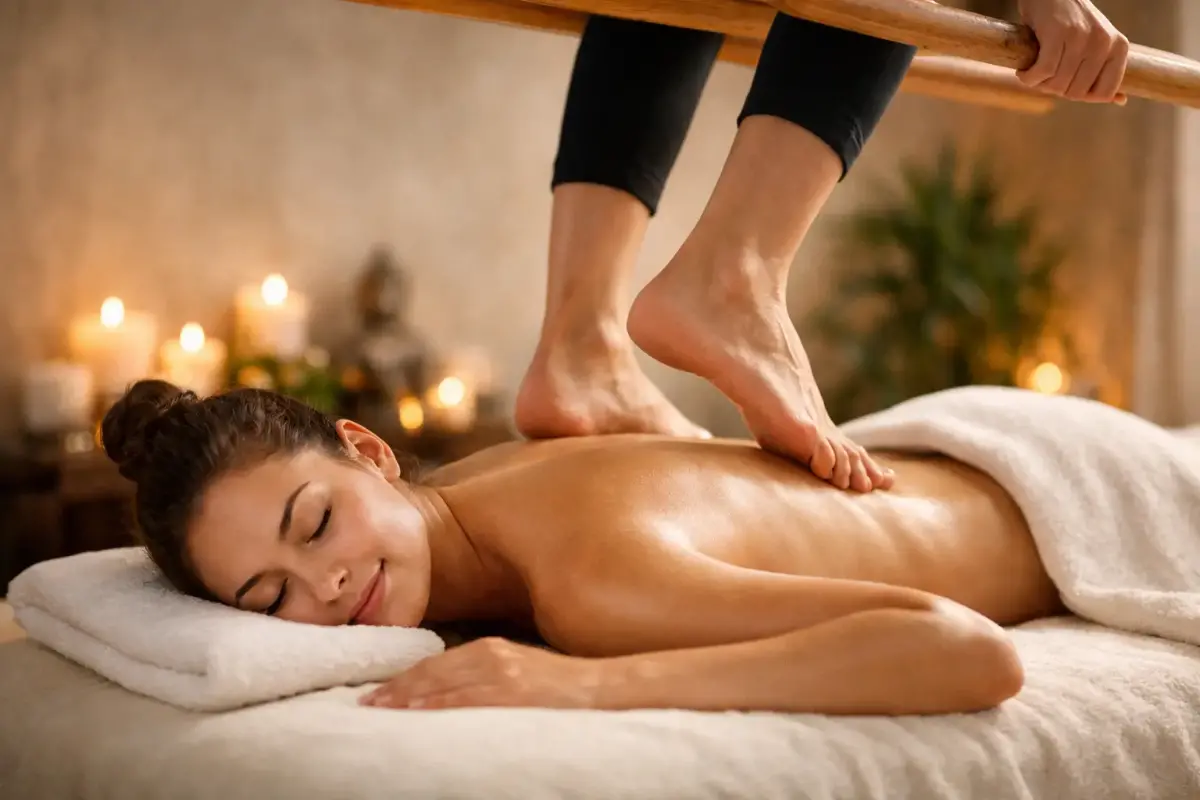
If deep tissue massage has ever felt like it almost helped - but not quite enough - ashiatsu may be the missing piece. The most talked-about ashiatsu massage benefits come from one simple difference: your therapist uses broad, consistent pressure from their feet to reach deep layers of tension without the sharp, poking sensation that hands, thumbs, or elbows can sometimes create.
That matters if you carry chronic tightness in your back, hips, shoulders, or legs, or if your body takes a daily beating from long desk hours, workouts, travel, or stress. Ashiatsu is not just about more pressure. Done well, it is about more effective pressure, more comfort during the work, and better results afterward.
What makes Ashiatsu different
Ashiatsu is a barefoot massage technique in which the therapist uses overhead bars for balance and control while applying deep, gliding pressure with the feet. Because the surface area of the foot is wider than a thumb or elbow, the pressure usually feels more even and less pinpointed. For many clients, that translates to deep work that feels surprisingly soothing.
This is one reason Ashiatsu often appeals to people who want serious relief but do not want a session that feels like they are bracing against pain the entire time. The depth can be significant, but the delivery is typically smoother, slower, and more compressive than aggressive.
Ashiatsu massage benefits for pain and tension
The biggest reason most people book Ashiatsu is simple: they hurt, they feel tight, or their body is not moving the way it should. In those cases, this modality can be especially useful because it allows the therapist to address large muscle groups with sustained pressure and long, flushing strokes.
1. Deeper relief for large muscle groups
The back, glutes, hamstrings, and calves often respond well to Ashiatsu. These areas tend to hold dense tension, especially in runners, cyclists, lifters, skiers, and anyone who spends hours sitting. Broader pressure can help the tissue relax enough to let the work go deeper without turning the session into a battle.
For clients with stubborn low back tightness or heavy leg fatigue, that depth can make a real difference. It is less about forcing the muscle to give up and more about creating enough sustained pressure for it to soften.
2. Less sharp discomfort during deep work
There is a common assumption that deeper massage has to hurt to work. That is not always true. One of the more practical ashiatsu massage benefits is that the pressure often feels more comfortable than traditional deep tissue techniques because it is distributed over a broader contact area.
That does not mean every stroke feels light. It means the sensation is often more grounded and less poking. If you have ever left a deep tissue session feeling bruised, overworked, or tense from guarding, Ashiatsu may feel more tolerable while still addressing the underlying problem.
3. Better mobility through reduced tissue restriction
When muscles stay chronically tight, they can limit how well you rotate, bend, squat, reach, and recover from activity. Ashiatsu can help reduce those restrictions, especially through the posterior chain - the back body that includes the spinal muscles, glutes, hamstrings, and calves.
Improved mobility does not come from massage alone, and it will not replace strength work or movement training. But it can make movement feel easier and less resisted, which is often the first step toward better function.
Recovery benefits for active bodies
If you train regularly, your body needs more than occasional relaxation. It needs maintenance. Ashiatsu can fit well into a recovery plan because it supports circulation, helps reduce muscular congestion, and gives overworked tissue a chance to reset.
4. Support after workouts and intense training blocks
Athletes and active adults often deal with a familiar cycle: train hard, tighten up, compensate, then feel the effects in other areas. Ashiatsu can help interrupt that pattern by working through broad bands of tension before they become a bigger movement issue.
This can be especially useful during heavy training periods, after races or events, or when your body feels generally loaded from repetitive effort. The work is not a substitute for rest, hydration, or smart programming, but it can complement all three.
5. A useful option for chronic tightness from work and lifestyle
Not every sore body belongs to an athlete. Plenty of people need deep bodywork because they sit too long, stand too long, commute too much, or carry stress in the same places every day. Tight hips, a locked-up upper back, and tension between the shoulder blades are common in busy urban professionals.
Ashiatsu works well here because it can address accumulated tension across wide areas instead of chasing one knot at a time. If your body feels compressed by your routine, broader decompressive pressure can feel like a reset.
Stress relief is part of the result
People often think of Ashiatsu as a pressure-first service, but the nervous system piece matters just as much. When pressure is steady, controlled, and not overly sharp, many clients find it easier to actually relax during the session.
6. Deep pressure can calm the nervous system
There is a reason some people feel noticeably lighter, quieter, or more grounded after a great massage. Deep, consistent touch can help shift the body out of a high-alert state. For clients dealing with work stress, poor sleep, physical fatigue, or mental overload, that downshift can be just as valuable as the muscular relief.
This is where customization matters. Some bodies need very deep pressure to let go. Others respond better to a blend of Ashiatsu with traditional therapeutic techniques. The best results come from matching the method to the person, not forcing every client into the same experience.
7. It can create longer-lasting relief for the right client
No massage guarantees permanent results. That said, one of the reasons clients return to Ashiatsu is that the effects can last longer when the body responds well to this style of work. Deeper compression across larger tissues may help create more noticeable change than lighter or more surface-level techniques.
It depends on the issue. If your pain is coming from movement habits, old injuries, stress, or training load, massage is one piece of the plan. But for many people, Ashiatsu delivers relief that feels more complete and less temporary.
When Ashiatsu is a good fit - and when it may not be
Ashiatsu is often a strong option for people who like firm pressure, have dense muscle tissue, or feel like standard massage has not been enough. It can be especially effective for chronic back tension, hip tightness, leg fatigue, and full-body recovery when deeper work is appropriate.
It is not automatically the best choice for everyone. If you are highly pressure-sensitive, dealing with certain acute injuries, have some health conditions, or simply prefer lighter bodywork, another style may be a better fit. Pregnancy, recent surgery, inflammation flare-ups, and some circulatory concerns may also change what is appropriate.
That is why an intake matters. A therapist should understand your pain points, health history, activity level, and goals before deciding how much pressure to use and where to focus. At LoDo Massage Studio, that personalized approach is central to getting real results instead of giving every client the same routine.
What to expect from your first session
If you have never tried Ashiatsu, the first surprise is usually how controlled it feels. Your therapist is not simply stepping on your back. They are using trained technique, body mechanics, and support bars to apply measured pressure with intention.
You can expect slow, broad strokes, focused work in high-tension areas, and ongoing communication about pressure. If something feels too intense, your therapist should adjust. The goal is productive work, not endurance.
After the session, you may feel looser, heavier in a good way, or noticeably more open through the back and hips. Some soreness is possible, especially if the tissue was very restricted going in, but many people report feeling less beat up than they do after more aggressive deep tissue sessions.
The real value of Ashiatsu massage benefits
The real value is not that Ashiatsu is trendy or different. It is that it gives the right client a better way to get deep therapeutic work. If your body needs substantial pressure, broad muscle release, and a session that supports both recovery and relaxation, this modality can be an excellent fit.
Good massage should meet your body where it is that day. Sometimes that means focused clinical work. Sometimes it means restoring mobility and calming the system enough for your muscles to stop fighting back. When Ashiatsu is thoughtfully tailored to your needs, it can do both.
If you have been living with tension that keeps returning, the next best step may be trying a style of bodywork built to reach it more effectively and more comfortably.